
Root Canal
Saving a tooth from extraction with endodontics
Sometimes, tooth decay can reach the internal structure of the tooth and cause the soft tissues inside to become infected. When this happens, root canal treatment (or endodontics) is necessary to remove the infected pulp. This helps prevent the infection from spreading, which may lead to an abscess or sometimes a tooth extraction.
Symptoms of an infected pulp can include pain, increased sensitivity to temperature, discolouration, a metallic taste, gum tenderness, or swelling. Please don’t suffer in silence and book an appointment today. We can also accept referrals from dentists. Please use the online referral system below.
Book an appointment Accepting referrals today! Use our online referral form
 What does root canal treatment involve?
 What does root canal treatment involve?
Root canal treatments usually requires several appointments, the number will depend on which type of tooth is being treated. Between appointments, the tooth will be covered and temporarily restored.
- An x-ray will be taken to check the root canals and see if there are any other signs of infection in the surrounding bone.
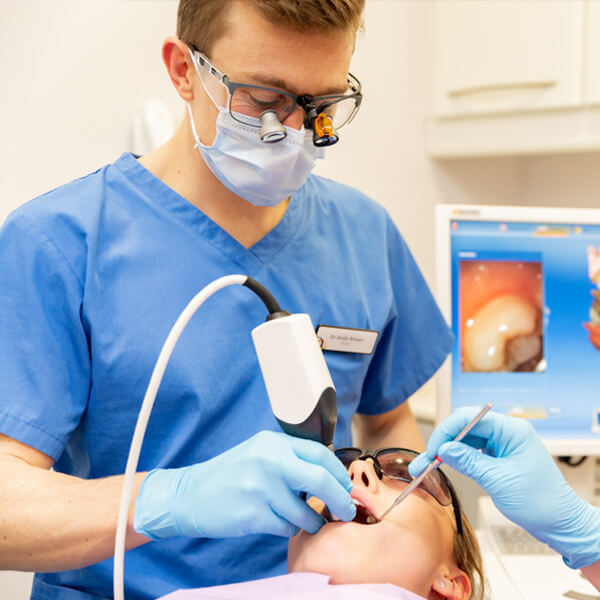
- A rubber sheet is placed around the tooth to keep it dry. The infected pulp is removed under a local anaesthetic (if necessary) and root canals are flushed with an anti-bacterial solution.
- The canals are shaped with tiny instruments and washed again to remove any debris.
- The freshly cleaned root canals are then filled with a rubber compound to seal the tooth and prevent bacteria from entering.
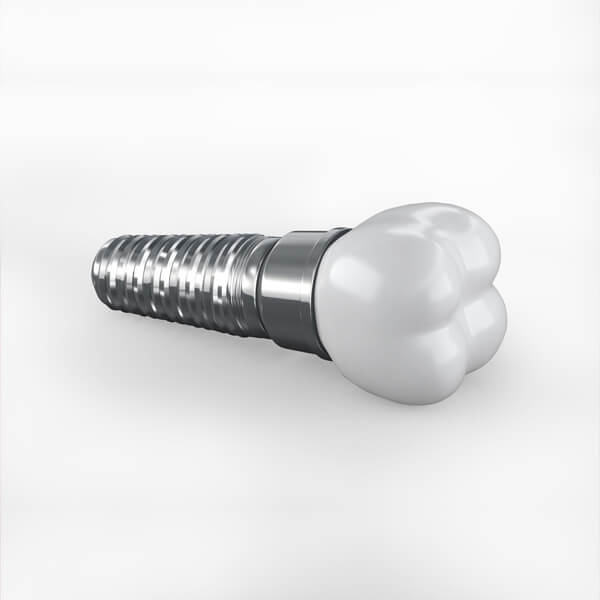
- The filled root canal is sealed with a permanent filling or may need a crown to help restore tooth shape and functionality.
Although this treatment has a reputation for being painful, the procedure should be no more uncomfortable than having a normal filling.
ACCELERATE HEALING WITH CUTTING-EDGE PRF THERAPY
Looking after your treated tooth
If looked after properly, with regular brushing and flossing, your root canal treated tooth should stay trouble-free and provide a long lasting repair. Even though the pulp has been removed, the tooth will stay intact because the canals have been sealed to prevent re-infection. Regular check-ups are also recommended so any problems can be detected early.
Meet our endodontist
Endodontists are experts in saving teeth that would otherwise need to be extracted. Root canal treatment avoids the cost and inconvenience of replacing missing teeth by removing the infected pulp and leaving the natural tooth behind. Root canal treatment requires great skill and precision from your endodontist, and specialised tools to clean and shape canals, flush out infection, internally bleach the tooth, and then seal with a filling.
At Hitchin Dental Care, we have vast experience and skill, and you can rest assured you are in safe hands.
 Dr Charlie Barnfield
Specialist Endodontist
GDC Number: 244930
BDS, MClinDent, MEndo (RCSEd), MEndo (RCSEng)
GDC No. 244930
Charlie graduated with a Bachelors of Dental Surgery from King’s College London in 2013. After completing foundation training in the West Midlands he furthered his experience with a senior house officer post in maxillofacial surgery at both Gloucester and Cheltenham Hospitals, before more general dental practitioner jobs in Sussex. He gained an MJDF (Membership in the Joint Dental Faculty) qualification from the Royal College of Surgeons of England in 2015.
Further interest developed in restorative dentistry, and he subsequently completed a one year postgraduate certificate in Endodontics (root canal treatment and root canal retreatments) from the University of Chester in 2016. Later that year, he was awarded a place on the very competitive MClinDent 4 year specialty training programme (leading to be a specialist Endodontist) from the world renowned Eastman Dental Hospital, with an affiliated national training number.
For the past three years Charlie has limited his practice to Endodontics, accepting internal and external referrals for complex root canal treatment procedures and endodontic surgeries, as well as diagnosis of dental pain, trauma management and internal bleaching.
Charlie has recently sat the Membership in Endodontics examinations from the Royal Colleges of Surgeons for London and Edinburgh. Attainment of this would be the highest possible qualification in the field of Endodontics. He has also been appointed to teach and mentor postgraduate dental students on the two year taught Diploma in Endodontics from the Eastman Dental Institute.
Charlie has a calm manner and takes time to fully discuss all the options, including the proposed treatment, so his patients can be at complete ease during the treatment process. He prides himself on providing precise technical work to provide the best level of care to his patients. In his spare time he likes to play golf, experiment with cooking and enjoys going to the latest theatre shows and museum exhibitions.
See what our patients say…
Choosing the right endodontist is a big decision. You want someone who is skilled, gentle, and experienced. Here at Hitchin Dental Care, we’re committed to providing exceptional root canal treatment in a comfortable and welcoming environment. But don’t just take our word for it, see what our patients have to say about their experiences with us.
FAQs
The aim of root canal treatment is to remove all the infection from the affected root canal. Therefore, it takes a few visits. The canal is cleaned and then filled. Initially, a temporary filling is placed and left to settle. When, on a subsequent visit, we have confirmed that the infection has gone, we can fit your permanent filling. The best part is that you will be out of pain, and you can look after your restoration as you would your other teeth.
Although root canal treatment has a reputation for being painful, it is often nowhere near as bad as you expect! The procedure should be no more uncomfortable than having a normal filling, and you will likely feel great relief once you are no longer in pain from the infection.
Yes, root canal treatment, also known as endodontics, is specifically designed to save a tooth from extraction when the internal structure is severely damaged or infected. The procedure is necessary when deep tooth decay, trauma, or deep fillings cause the soft tissue, nerves, and blood vessels inside the tooth (the pulp) to become infected. By removing the infected pulp, thoroughly cleaning the root canals with an anti-bacterial solution, and sealing them with a rubber compound and a permanent filling or crown, the treatment removes the source of the infection and allows the tooth structure to be preserved for a long-lasting repair.
Delaying root canal treatment allows the internal infection to persist, leading to increasingly severe and uncomfortable symptoms. These symptoms can include persistent pain, high sensitivity to temperature, gum tenderness, swelling, and a metallic taste or tooth discolouration. Most critically, because the treatment’s purpose is to "save a tooth from extraction," delaying the necessary procedure significantly increases the risk that the infection will progress too far. This may lead to the eventual deterioration of the tooth and supporting bone, ultimately resulting in the loss of the tooth, necessitating complete removal.
The cost of root canal treatment, or endodontics, varies depending on the specific tooth being treated. Treatment for Incisor, Canine or Premolar teeth costs £985.00, while treatment for a molar tooth is £1150.00. These figures cover the specialist procedure itself. Patients will also have an initial endodontics consultation, which costs £99.00, and may require an Endo Review at £40.00. These fees reflect the high level of care and specialist expertise provided during the treatment with us.
The decision on whether you need a crown is based on the condition of the tooth after the root canal treatment is complete. The procedure concludes with the root canal being sealed and the tooth being permanently restored, which may be done with either a permanent filling or a crown. A crown is often recommended for teeth that have lost a significant amount of their structure due to decay or damage. Its purpose is to protect the tooth from further stress or fracture, restore its original shape, and ensure maximum strength and functionality for long-term use.