
Frenectomy
Tongue tie release in Hitchin
Finding local, expert care is essential when considering a tongue tie release. Our Hitchin-based clinic provides a calm, supportive environment where we prioritise your comfort and that of your child. We understand that the decision to proceed with a clinical treatment can feel daunting, which is why we focus on a gentle, family-centred approach to ensure you feel informed and confident every step of the way.
Our Hitchin clinic offers specialised care for adults seeking a frenectomy. We understand that as an adult, you’ve likely spent a lifetime adapting to restricted tongue movement. We provide a professional, discreet environment where we assess how a tongue tie release can improve your specific symptoms, from jaw tension to speech clarity.
What is a frenectomy?
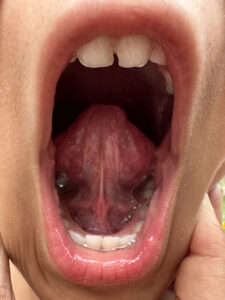 A lingual frenectomy (tongue-tie) is the clinical term for the procedure used to remove the tissue under the tongue, or behind the lips, to fix restricted movement. It is a quick, safe, and straightforward process where the restrictive tissue (the frenulum) is carefully released.
For infants: The procedure typically takes only a few minutes. Because the tissue involved has very few nerve endings and blood vessels, it is often performed with minimal discomfort. Many babies even sleep through the process or settle quickly with a feed immediately afterward.
The adult experience: A frenectomy for an adult is a straightforward, minor surgical procedure. Using precise tools, often a specialised laser, the restrictive frenulum is released to allow the tongue its full range of motion.
Unlike the infant version, adult procedures are typically performed under a local anaesthetic to ensure you are completely comfortable. The process is quick, and you can usually return to your daily routine shortly after.
Common signs of tongue tie
A tongue tie (ankyloglossia) occurs when the small strip of tissue connecting the tongue to the floor of the mouth is shorter or tighter than usual. This can restrict the tongue’s range of motion.
Watch for these common indicators in babies and infants:
- Difficulty latching: Baby has trouble staying attached to the breast or bottle.
- Clicking sounds: Hearing a clicking noise during feeding.
- Poor weight gain: Difficulty taking in enough milk to grow steadily.
- Maternal discomfort: Pain, bruising, or cracked nipples during breastfeeding.
- Heart-shaped tongue: The tip of the tongue may look notched or heart-shaped when the baby tries to lift it.
In adults, the signs of a tongue tie are often more subtle than in infants, manifesting as chronic tension or functional struggles.
Common adult symptoms include:
- Speech issues: Difficulty pronouncing certain sounds (like “t,” “d,” “l,” or “r”) or feeling like you mumble.
- Chronic tension: Persistent tightness in the jaw (TMJ), neck, or shoulders.
- Sleep issues: Snoring or mouth breathing, as the tongue cannot rest properly against the roof of the mouth.
- Dental problems: Receding gums or a narrow palate due to improper tongue posture.
- Eating habits: Difficulty swallowing pills or a tendency to choke on food if not chewed thoroughly.
Benefits of tongue tie release
For infants: Choosing a tongue tie release can lead to significant improvements in daily life for both you and your baby. Key benefits include:
- Improved feeding: A deeper, more effective latch allows for better milk transfer.
- Reduced pain: A significant decrease in breastfeeding pain for mothers.
- Long-term development: Supporting proper oral resting posture, which can be beneficial for future speech development and solid food introduction.
- Bonding: Reducing the stress of feeding battles allows for a more relaxed, joyful bonding experience.
For adults: Addressing a tongue tie in adulthood can feel almost like releasing a tether that you didn’t know was there.
- Relief from pain: Many patients report an immediate reduction in chronic neck and jaw tension.
- Improved sleep: Better tongue posture helps keep the airway open, potentially improving sleep quality.
- Clearer speech: Increased range of motion makes articulation easier and less tiring.
- Better digestion: Improved tongue function leads to more effective chewing and a more natural swallow reflex.
Aftercare and recovery
For infants: One of the best things about a frenectomy is the rapid recovery time. Most infants can (and should) feed immediately after the procedure, as the motion of sucking acts as a natural way to soothe and exercise the tongue.
What to expect during recovery:
- Healing: A small white or yellow patch may form at the site. This is a normal part of the oral healing process, similar to a scab inside the mouth.
- Exercises: We may recommend simple active wound management stretches to ensure the tissue heals with maximum flexibility.
- Support: We provide a follow-up plan to monitor healing and ensure your feeding journey is back on the right track.
For adults: Recovery from an adult tongue tie release is generally fast, though it does require a bit more active participation than it does for babies.
The recovery path includes:
- Myofunctional therapy: For adults, re-learning how to use your tongue is vital. We often recommend specific exercises to strengthen the tongue and prevent the tissue from re-attaching.
- Initial healing: You may experience some mild soreness for 3–5 days, which is easily managed with over-the-counter pain relief.
- Diet: You’ll likely want to stick to softer foods for the first 48 hours to avoid irritating the site.
- Long-term results: With consistent stretching and exercises, the increase in mobility is permanent and can lead to a significant improvement in your overall quality of life.
Frequently Asked Questions
Yes, a tongue tie release can be successfully performed at almost any stage of life, from newborns just a few days old to older adults. In infants, the focus is usually on improving breastfeeding and weight gain, whereas for children and adults, the procedure is often sought to address speech clarity, jaw tension, or sleep quality. While the procedure itself is similar across all ages, the approach to aftercare changes as we get older; infants rely on natural sucking motions to heal, while adults typically engage in specific tongue exercises (myofunctional therapy) to make the most of their new range of motion.
The initial healing phase following a frenectomy is remarkably quick, usually taking about 7 to 10 days for the tissue to stabilise. For most patients, the site of the tongue tie release will form a small, white or yellowish diamond-shaped patch, which is a normal sign of healing in a moist environment. While you can usually return to eating and normal activities within a day or two, the full, functional recovery, which involves retraining the tongue muscles, can take a few weeks of consistent stretching and exercises to ensure the best long-term results and prevent the tissue from tightening again.
A tongue tie release can significantly enhance oral function by removing the physical tether that restricts the tongue's movement. For many, this leads to clearer speech, especially with sounds that require the tongue to touch the roof of the mouth. Beyond speech, a frenectomy improves the way you swallow, breathe, and even rest your jaw. However, it is important to remember that the procedure provides the range of motion, while practice provides the skill; for adults and older children, working with a speech therapist or myofunctional therapist after the release is often the key to fully unlocking these improvements.
We prioritise patient comfort to ensure the experience is as stress-free as possible. For infants, the tongue tie release is so brief that many babies settle almost immediately with a feed or a cuddle. For older children and adults, we use a local anaesthetic to completely numb the area, meaning you shouldn’t feel any pain during the procedure itself. Afterwards, you might feel some mild soreness or aching in the tongue or jaw, similar to the feeling of a muscle that has had a strenuous workout, but this is typically well-managed with standard over-the-counter pain relief and usually fades within a few days.